01

Banff in July

Book Banff

Book Banff National Park Adventures and Attractions. Banff National Park's towering peaks and beautiful meadows make it among Canada's most incredible holiday areas. Plan your Canadian Rockies vacation and Book Banff's most popular attractions.

Book Banff National Park Book Banff
Banff National Park Wildlife

02

Banff National Park

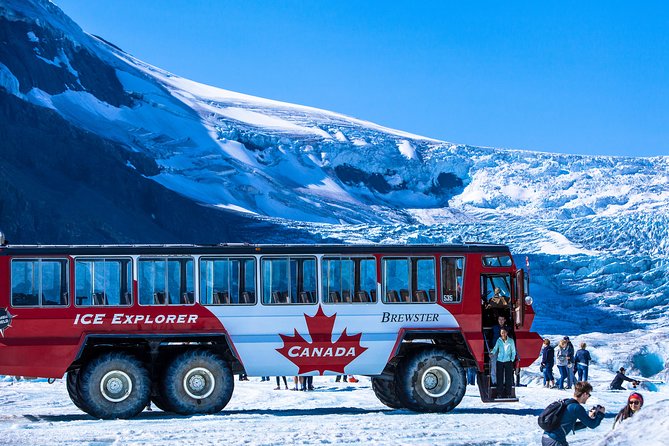
Columbia Icefield Tour & Glacier Skywalk

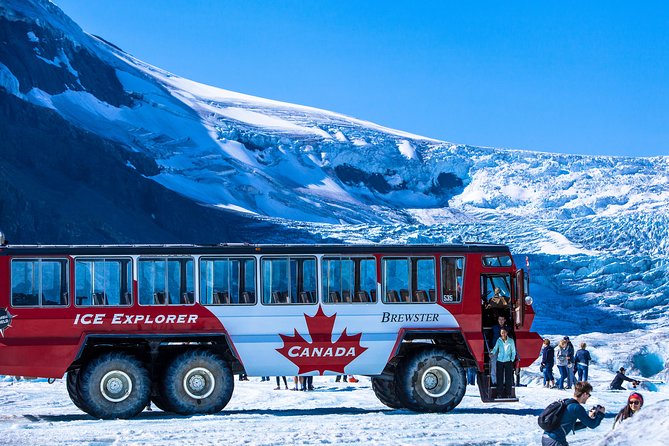
Columbia Icefield Tour including the Glacier Skywalk from Icefield Glacier Discovery Centre. Discover the awe-inspiring mountain scenery and massive glaciers of Alberta's Rocky Mountain region on this Columbia Icefields tour.

Jasper Columbia Icefield Tour & Glacier Skywalk
Book Glacier Skywalk and Athabasca Glacier Tour Jasper Columbia Icefield Home
Jasper Wildlife Tour Videos

03

Banff in July

Banff Gondola Ride Admission

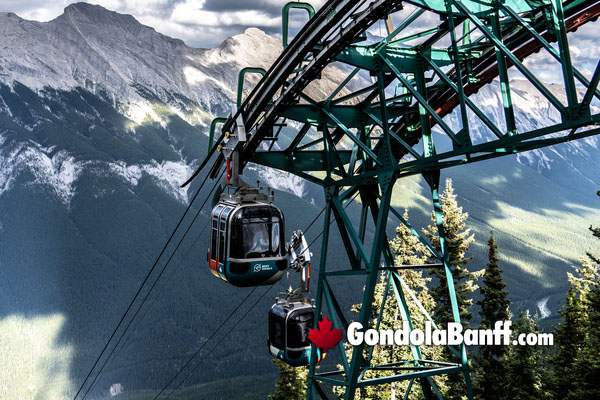
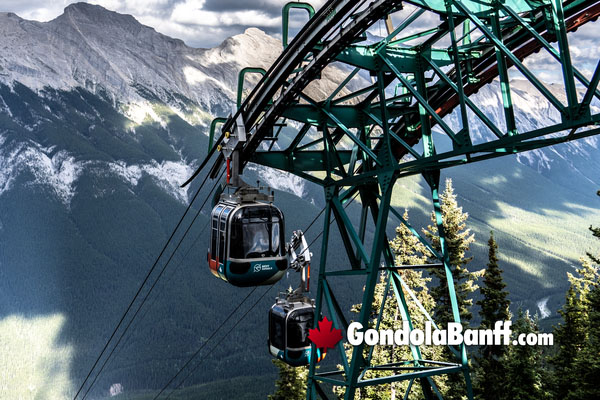
The Popular Banff Gondola provides visitors with an amazing scenic ride to the summit of Sulphur Mountain, offering panoramic views of the Canadian Rockies and the Bow Valley.

Banff Gondola at Sulphur Mountain
*Purchasing Gondola Tickets in Advance is Recommended. Book the Banff Gondola Banff Gondola Home
Banff National Park Wildlife

Canadian Rockies Summer Wildlife Tour - Banff in July

Learn of the steps taken in Canada's National Parks that ensure wildlife survival in the park, and gain insight into Banff's rich ecology, history and geology. This is a must for wildlife and nature lovers.


Canadian Rockies Summer Wildlife Tour - Banff in July

Book Banff's Wildlife Tour

July in Banff National Park

July is peak summer in Banff. Long daylight hours-often stretching past 10 p.m. - combine with warm daytime temperatures and fully accessible alpine terrain. A great time to witness the beautiful Banff landscapes and enjoy a variety of outdoor adventures.


Things to Do in Banff in July

July is peak summer in Banff. Long daylight hours-often stretching past 10 p.m.-combine with warm daytime temperatures and fully accessible alpine terrain. Trails are open at most elevations, lakes are vibrant turquoise, and the town carries a lively, high-energy atmosphere. It is the busiest month of the year, so advance planning is essential, but the range of outdoor and cultural experiences is at its widest.

July Hiking & Alpine Exploration in Banff

July offers full access to Banff's hiking network. Valley trails are dry and forested routes provide shade, while higher alpine areas are typically snow-free by mid-month.

Classic hikes include routes toward Lake Agnes and the Plain of Six Glaciers near Lake Louise, as well as open alpine meadows at Sunshine Meadows. Wildflowers bloom in subalpine areas, and visibility from ridgelines is often exceptional on clear days.

Start early in the morning to avoid both heat and crowds. Wildlife remains active; bear spray and proper food storage are mandatory considerations in backcountry areas.

Banff Lakes, Canoeing & Water Activities in July

July is ideal for lake-based recreation.
Lake Minnewanka supports boat cruises, kayaking, and shoreline hiking. Winds can increase in the afternoon, so mornings are typically calmer for paddling.
Lake Louise is fully thawed and brilliantly colored. Canoe rentals operate daily, and the surrounding trails offer elevated vantage points over the lake basin.
Swimming in glacial lakes remains extremely cold, even in July. Wetsuits are required for comfort and safety in extended exposure.

Banff Gondola & Summit Views During July

The Banff Gondola provides efficient access to panoramic views from Sulphur Mountain. In July, the summit boardwalk is typically clear and fully accessible, and the long daylight window allows for sunset visits. Evening light over the Bow Valley can be particularly dramatic.
Reservations are strongly recommended during this high-demand period.

July Scenic Drives & Banff Photography

Driving the Icefields Parkway in July offers clear roads, accessible pullouts, and fully flowing waterfalls. Wildlife sightings-mountain goats, bighorn sheep, and occasionally bears-are common in early morning or evening hours.
Within town, Bow Falls and Surprise Corner are accessible year-round and especially photogenic under summer lighting.

Banff Cycling & Adventure Activities in July

July is prime cycling season. The Banff Legacy Trail connecting Banff and Canmore is fully operational and suitable for recreational riders. Mountain biking trails at various elevations are typically dry and in peak condition.
Whitewater rafting on the Bow River and nearby Kananaskis waterways is in full operation. Guided climbing, via ferrata experiences, and horseback riding tours also run consistently through the month.

July Banff Festivals, Dining & Evening Atmosphere

July carries a vibrant town atmosphere. Outdoor patios are active, live music and cultural programming increase, and extended daylight encourages evening walks along Banff Avenue. Restaurants, tour operators, and retail shops operate at full capacity.
Parking fills early, and transit or shuttle services are often more efficient than driving to popular sites.

Practical Considerations

Reserve accommodations and major attractions well in advance.
Start hikes and sightseeing early to manage crowds.
Carry water, sun protection, and bear spray.
Expect high visitation at iconic lakes and trailheads.

July in Banff delivers the most expansive range of experiences: open alpine terrain, brilliant glacial lakes, energetic town life, and long, luminous evenings-ideal for visitors seeking the full summer mountain experience.

Banff Gondola During July

The Gondola summit complex becomes especially lively during July. Outdoor patios are busy with visitors relaxing in the sunshine, dining with mountain views, or enjoying the fresh alpine atmosphere. The restaurants, cafés, interpretive areas, and viewing decks remain active throughout the day as travelers gather to experience one of the most iconic mountain viewpoints in the Canadian Rockies.

Banff Gondola During July

Banff Gondola During July

The summer experience at the Banff Gondola during July is one of the most vibrant and scenic times of the year in the Canadian Rockies. Warm mountain air, long daylight hours, lush alpine landscapes, and expansive panoramic views combine to create a classic Banff summer atmosphere. The ride up Sulphur Mountain feels alive with activity as gondola cabins glide above dense evergreen forests toward sweeping views of the Bow Valley and surrounding mountain ranges. July is peak summer season, so the atmosphere is energetic, social, and filled with visitors exploring the mountain environment.

At the summit, the landscape is fully transformed from spring conditions. The mountainsides are green, alpine meadows begin showing bursts of wildflowers, and hiking areas around the summit are generally free of snow. Visibility is often excellent in July, allowing guests to see distant ridgelines, Mount Rundle, Cascade Mountain, the Bow River, and the Banff townsite far below. The long daylight hours are especially memorable, with early sunrises and lingering evening light creating dramatic colors across the Rockies late into the evening.

Weather during July is usually comfortable and mild during the daytime, though the summit remains noticeably cooler than the valley below because of the elevation. Visitors often arrive in warm summer temperatures at the base station and discover refreshing mountain air at the top. Light jackets or layered clothing are still useful, especially during mornings, evenings, or breezy periods along the boardwalk. Occasional afternoon mountain showers can move through quickly before returning to sunshine.

The Sulphur Mountain boardwalk is one of the highlights during July. The elevated pathway toward Sanson’s Peak offers wide-open ridge-top scenery and a true alpine atmosphere. Walking along the boardwalk during summer feels immersive and expansive, with crisp mountain air, sunlight illuminating the rocky peaks, and endless photo opportunities in nearly every direction. The higher elevation creates a feeling of standing above the forests and valleys below, surrounded by mountain ranges stretching deep into the horizon.

July is also an excellent month for wildlife viewing around Banff. Although animals are not guaranteed near the gondola itself, visitors often remain alert for elk, deer, mountain goats, bighorn sheep, and occasionally bears in the surrounding mountain terrain and valleys. Early mornings and evenings tend to offer the best opportunities for spotting wildlife activity.

The summit complex becomes especially lively during July. Outdoor patios are busy with visitors relaxing in the sunshine, dining with mountain views, or enjoying the fresh alpine atmosphere. The restaurants, cafés, interpretive areas, and viewing decks remain active throughout the day as travelers gather to experience one of the most iconic mountain viewpoints in the Canadian Rockies. Sunset periods in July are particularly beautiful, as warm evening light slowly moves across the surrounding peaks and valleys while the town of Banff begins glowing below. Banff Gondola

Jasper Columbia Icefields in July

Visiting the Columbia Icefield during July feels like stepping into a high-altitude world shaped by ice, elevation, and geological forces. Even at the height of summer, the environment retains a cold, rugged, and glacial character that reminds visitors they are standing beside one of the largest accumulations of ice in the Rocky Mountains.

Jasper Columbia Icefields in July

Jasper Columbia Icefields in July

The Columbia Icefield during July is one of the most dramatic and accessible glacier experiences in the Canadian Rockies. Mid-summer brings long daylight hours, relatively mild mountain temperatures, and some of the clearest road and sightseeing conditions of the year along the Icefields Parkway. The contrast between bright summer skies, exposed rocky peaks, and the immense white icefields creates a striking alpine landscape that feels both massive and ancient.

July is considered peak season for visiting the Columbia Icefield because nearly all visitor services and attractions are fully operating. Snow has largely retreated from lower elevations, exposing rugged mountain terrain and turquoise glacier-fed streams throughout the surrounding valleys. At the same time, the glaciers themselves remain immense and visually dominant, spilling down from the Columbia Icefield into broad frozen tongues of ice that can still appear winter-like even during the height of summer.

The Athabasca Glacier is one of the major highlights during July. Visitors can stand near the toe of the glacier and immediately feel cooler air radiating from the ice. The scale becomes especially impressive in summer because the surrounding mountain slopes are mostly snow-free, making the glacier itself stand out even more against the dark rock faces. Meltwater streams flow across parts of the landscape, and the glacier surface often shows textures, cracks, ridges, and blue ice formations that become more visible during warmer months.

Driving through the area in July is a major part of the experience. The Icefields Parkway is typically in excellent condition during summer, allowing travelers to enjoy uninterrupted views of glaciers, waterfalls, mountain passes, alpine meadows, and wildlife habitats along the route between Banff and Jasper. The drive approaching the Columbia Icefield feels increasingly dramatic as the mountains grow larger and the glaciers begin dominating the skyline.

July weather around the icefields is generally more comfortable than spring or fall, but conditions still feel distinctly alpine. Daytime temperatures can be pleasant near the visitor areas, while winds and elevation near the glacier itself often create surprisingly cool conditions. Weather can also shift quickly, with sunshine, clouds, fog, or brief mountain showers changing the atmosphere throughout the day. Even in July, fresh snow can occasionally dust the higher peaks overnight.

The surrounding scenery during July is exceptionally photogenic. Meltwater lakes and rivers often display vivid turquoise colors caused by glacial silt, while alpine slopes may contain patches of wildflowers in lower elevations. The combination of exposed mountains, flowing water, and ancient ice gives the region a raw and powerful appearance unlike most other summer destinations.

Wildlife activity also increases during July throughout the Icefields Parkway corridor. Mountain goats, bighorn sheep, elk, marmots, and bears are sometimes seen in roadside valleys or alpine slopes surrounding the icefield region. Early mornings and evenings are often the best times for spotting animals moving through the mountain landscape.

Visiting the Columbia Icefield during July feels like stepping into a high-altitude world shaped by ice, elevation, and geological forces. Even at the height of summer, the environment retains a cold, rugged, and glacial character that reminds visitors they are standing beside one of the largest accumulations of ice in the Rocky Mountains. Jasper Columbia Icefields

Columbia Icefields Glacier Skywalk During July

Experiencing the Columbia Icefield Skywalk during July combines alpine sightseeing, glacier scenery, and the sensation of standing high above one of the most spectacular valleys in the Canadian Rockies.

Columbia Icefields Glacier Skywalk During July

Columbia Icefields Glacier Skywalk During July

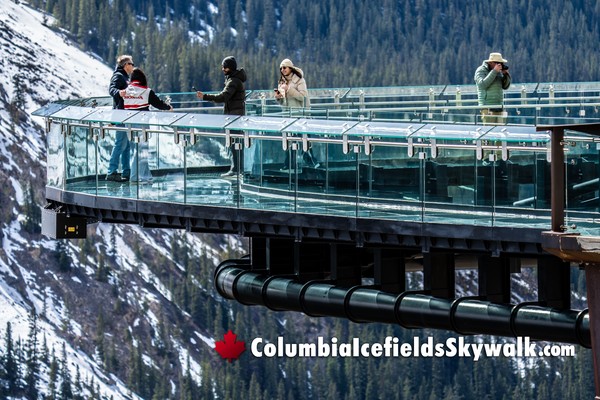
The Columbia Icefield Skywalk during July offers one of the most dramatic high-elevation sightseeing experiences in the Canadian Rockies. Summer conditions bring clear mountain views, long daylight hours, and relatively comfortable temperatures, making July one of the most popular times to visit the glass-floored observation platform overlooking the Sunwapta Valley far below.

By July, the surrounding mountain environment is fully alive with summer scenery. Snow has mostly retreated from the lower slopes, exposing rugged cliffs, alpine terrain, waterfalls, and glacier-fed rivers winding through the valleys beneath the Skywalk. The contrast between the exposed rock faces, green mountain slopes, and distant glaciers creates an enormous panoramic landscape that feels both open and wild.

Walking onto the glass platform in July is especially striking because visibility is often excellent. Visitors can look straight down through the transparent floor to the valley floor hundreds of feet below while surrounded by towering peaks and expansive mountain ranges in nearly every direction. The combination of altitude, open air, and sweeping scenery creates a thrilling feeling of standing suspended above the Rockies.

The weather during July is generally mild by mountain standards, but the elevation and exposed cliffside location can still feel cool and windy. Sunshine is common, though mountain weather changes quickly and passing clouds can dramatically alter the lighting and atmosphere across the valleys and glaciers. Morning visits often provide calmer conditions and softer lighting, while late afternoons can produce dramatic shadows and glowing mountain colors.

The interpretive pathways leading to the Skywalk are especially enjoyable during July. The route allows visitors to move through alpine terrain while learning about glaciers, geology, wildlife, and the formation of the surrounding mountain landscape. Meltwater streams, rocky outcrops, and distant icefields help reinforce the feeling of being in a powerful glacial environment shaped over thousands of years.

July also enhances the scale of the surrounding scenery because the glaciers stand out sharply against the mostly snow-free mountainsides. In the distance, visitors can often see the immense white icefields resting high among the darker peaks, emphasizing the contrast between summer warmth in the valleys and the permanent ice above.

Wildlife sightings are possible throughout the area during July. Mountain goats, bighorn sheep, marmots, and occasionally bears may appear along nearby slopes or roadside sections of the Icefields Parkway. The entire region feels active during the summer season, with travelers stopping frequently to admire the scenery and photograph the towering landscapes.

Experiencing the Columbia Icefield Skywalk during July combines alpine sightseeing, glacier scenery, and the sensation of standing high above one of the most spectacular valleys in the Canadian Rockies. The clear summer conditions, vivid mountain colors, and immense sense of scale make it one of the most memorable stops along the Icefields Parkway. Columbia Icefields Glacier Skywalk

Golden Skybridge in July

Visiting the Golden Skybridge during July combines mountain scenery, canyon exploration, outdoor adventure, and classic summer Rockies energy. The warm weather, strong waterfall flow, and lush mountain environment make midsummer one of the most visually impressive and enjoyable times to experience the attraction.

Golden Skybridge in July

Golden Skybridge in July

The Golden Skybridge during July is a lively summer mountain attraction filled with warm weather, green forests, rushing canyon waterfalls, and long daylight hours. July is one of the busiest and most energetic times to visit, with the surrounding Columbia Valley fully transformed into vibrant summer scenery. The combination of suspension bridges, canyon views, mountain landscapes, and outdoor adventure activities creates an exciting atmosphere for visitors of all ages.

The suspension bridges themselves feel especially dramatic during July because the canyon below is alive with flowing water from ongoing snowmelt higher in the mountains. The waterfalls beneath the bridges are often powerful and loud during midsummer, adding movement and sound to the experience as guests walk high above the canyon floor. Looking down through the bridge structures reveals steep cliffs, dense forest, and rushing water carving through the rugged terrain below.

Summer conditions make the entire park comfortable for exploring. July temperatures are usually warm during the day, though the canyon environment and mountain breezes can still feel refreshing compared to lower-elevation heat elsewhere. Bright sunshine often lights up the surrounding forests and peaks, while long evenings allow visitors to spend extended time exploring the area without feeling rushed.

The views from the bridges during July are expansive and colorful. Dense green forests stretch across the valley slopes, distant mountain ridges frame the horizon, and the canyon below provides dramatic depth and scale. The contrast between the suspended walkways and the rugged natural environment creates a strong sense of adventure while still remaining accessible for families and casual visitors.

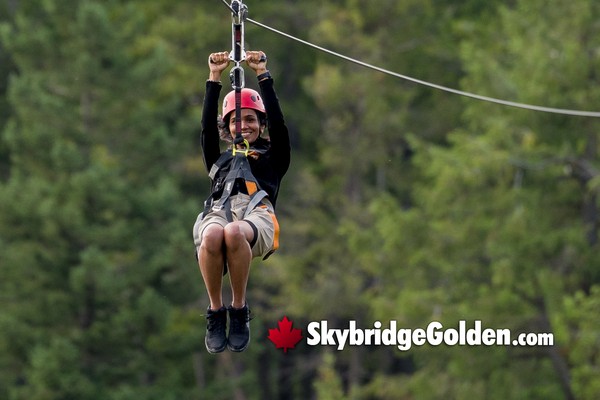
July is also ideal for enjoying the additional adventure features around the Skybridge area. Activities such as ziplining, mountain coasters, aerial attractions, and scenic walking trails are fully active during the summer season. The grounds feel vibrant and social, with visitors moving between attractions, relaxing in outdoor seating areas, and taking photos from the numerous viewpoints around the property.

The atmosphere in July is especially lively because Golden becomes a popular summer stop for travelers exploring the Canadian Rockies. Many visitors combine the Skybridge experience with road trips through Banff, Yoho, Glacier National Park, or the Icefields Parkway, making the area feel energetic and active throughout the day.

Evenings during July can be particularly beautiful. The later sunsets allow warm golden light to fall across the surrounding mountain ranges and forests, creating softer lighting conditions and dramatic shadows across the canyon landscape. The bridges themselves often appear even more striking during these calmer evening hours.

Visiting the Golden Skybridge during July combines mountain scenery, canyon exploration, outdoor adventure, and classic summer Rockies energy. The warm weather, strong waterfall flow, and lush mountain environment make midsummer one of the most visually impressive and enjoyable times to experience the attraction. Golden Skybridge

Banff Lake Minnewanka Boat Cruise in July

Experiencing the Lake Minnewanka boat cruise during July combines warm summer conditions with powerful mountain scenery, glacier-fed water, wildlife potential, and peaceful moments surrounded by some of the most dramatic landscapes in the Canadian Rockies.

Lake Minnewanka Boat Cruise in July

Banff Lake Minnewanka Boat Cruise in July

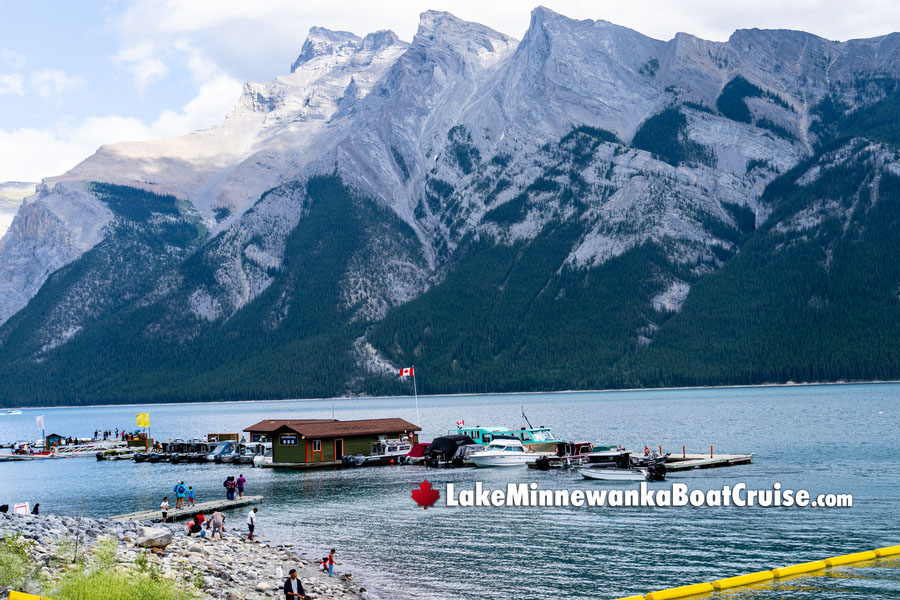
The Lake Minnewanka boat cruise during July is one of the most scenic and refreshing summer experiences in Banff National Park. July brings warm daytime temperatures, long hours of sunlight, deep blue water, and fully accessible shoreline facilities, making midsummer one of the most popular times to explore the lake by boat. The combination of towering mountain scenery, cool alpine air, and the immense scale of the lake creates a classic Canadian Rockies atmosphere.

By July, Lake Minnewanka is fully thawed and vibrant with summer activity. The surrounding forests are lush and green, mountain slopes are largely snow-free at lower elevations, and the lake itself often reflects bright blue and turquoise tones under clear skies. The cruise allows visitors to move far beyond the shoreline, opening up expansive views of the surrounding peaks and remote wilderness areas that are difficult to experience from land alone.

As the boat travels across the lake, the scale of the landscape becomes especially impressive. Steep mountain walls rise directly from the water, forested valleys stretch into the distance, and rugged ridgelines frame the horizon on nearly every side. July’s longer daylight hours provide excellent lighting for sightseeing and photography, particularly during morning and evening cruises when the mountains reflect beautifully across calmer water conditions.

The weather during July is generally comfortable and warm around the lake, though conditions on the water can still feel cool because of mountain breezes and the cold glacial-fed water. Light jackets remain useful, especially during early morning departures or cloudy periods. Afternoon sunshine often creates sparkling reflections across the lake surface, while occasional passing mountain clouds can add dramatic contrast to the scenery.

Wildlife viewing opportunities increase during July around the Lake Minnewanka area. Bighorn sheep, deer, elk, mountain goats, and occasionally bears are sometimes seen along nearby slopes or forested shoreline sections. Bald eagles and other birds may also appear overhead or near the water’s edge during the cruise.

The atmosphere around the marina during July is energetic and lively. Visitors gather along the shoreline, enjoy lakeside walks, launch kayaks and canoes, or relax near the water while surrounded by mountain scenery. The entire area feels active with summer tourism while still maintaining the rugged wilderness character that makes Banff so iconic.

One of the most memorable parts of the July boat cruise is the sense of openness and isolation once the vessel moves deeper into the lake. The farther the boat travels from the marina, the more the surrounding wilderness dominates the experience. Dense forests, steep cliffs, and quiet mountain valleys create a feeling of entering a remote alpine landscape shaped by water, glaciers, and time.

Experiencing the Lake Minnewanka boat cruise during July combines warm summer conditions with powerful mountain scenery, glacier-fed water, wildlife potential, and peaceful moments surrounded by some of the most dramatic landscapes in the Canadian Rockies. Banff Lake Minnewanka Boat Cruise

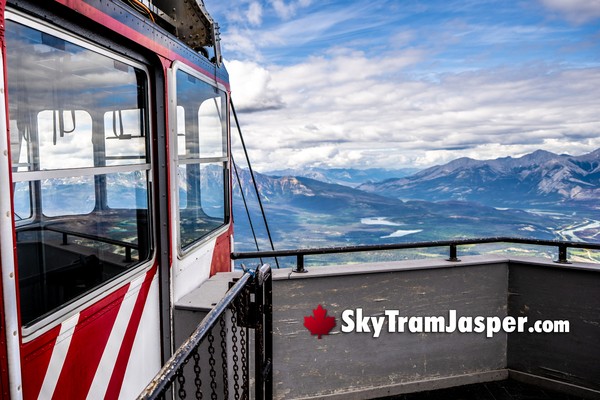
Jasper SkyTram in July

Experiencing the Jasper SkyTram during July combines classic summer mountain weather with high-altitude scenery, accessible alpine hiking, and some of the broadest panoramic views anywhere in the Canadian Rockies.

Jasper SkyTram Opens in July

Jasper SkyTram in July

The Jasper SkyTram during July offers one of the most spectacular high-alpine sightseeing experiences in the Canadian Rockies. Mid-summer brings warm valley temperatures, long daylight hours, accessible hiking terrain, and expansive mountain visibility, making July one of the best times of the year to experience the tramway and the summit of Whistlers Mountain.

The ride itself feels dramatic from the moment the tram leaves the lower station. As the cabin rises above the forests surrounding Jasper, the Athabasca Valley begins unfolding below with increasingly panoramic views of mountain ranges, rivers, lakes, and the Jasper townsite. July conditions often provide clear air and strong visibility, allowing visitors to see for enormous distances across the surrounding Rockies.

By July, the alpine environment near the upper terminal is usually free of major snow coverage, exposing the rugged tundra terrain and rocky slopes that define the summit landscape. The contrast between the green valley floor far below and the exposed alpine environment above the tree line becomes especially striking during midsummer. Wildflowers may appear in certain alpine areas, while marmots and pikas are sometimes spotted among the rocky terrain.

The summit atmosphere during July feels cool, fresh, and distinctly alpine even while the town below experiences warm summer weather. Temperatures at the top are noticeably lower because of the elevation, and breezes across the exposed mountain slopes can feel refreshing or brisk depending on conditions. Layered clothing remains useful even during sunny summer afternoons.

One of the major highlights during July is the ability to hike beyond the upper terminal toward the true summit areas of Whistlers Mountain. The trails are generally much more accessible during midsummer, allowing visitors to experience wide-open ridge-top scenery with uninterrupted views in nearly every direction. The feeling of standing above the forests and valleys creates a strong sense of scale and elevation unique to alpine environments.

The views during July are exceptional. Visitors can often see Pyramid Mountain, Mount Robson in the far distance on clear days, winding river valleys, forested slopes, alpine ridges, and the broad Jasper townsite far below. Sunlight moving across the mountains throughout the day creates constantly changing shadows and colors across the landscape.

Wildlife activity around the SkyTram area can also be impressive during July. Mountain goats, marmots, bighorn sheep, and various alpine birds are sometimes visible near the upper elevations, while elk and deer may appear closer to the valley floor. Early mornings and evenings often provide calmer conditions and increased wildlife movement.

The overall atmosphere during July is energetic yet peaceful. Visitors gather on patios, viewing areas, and hiking trails while surrounded by the crisp mountain air and immense scenery of Jasper National Park. Sunset periods can be especially memorable as warm evening light spreads across the mountain ranges and the valley below gradually darkens beneath the alpine peaks.

Experiencing the Jasper SkyTram during July combines classic summer mountain weather with high-altitude scenery, accessible alpine hiking, and some of the broadest panoramic views anywhere in the Canadian Rockies. Jasper SkyTram

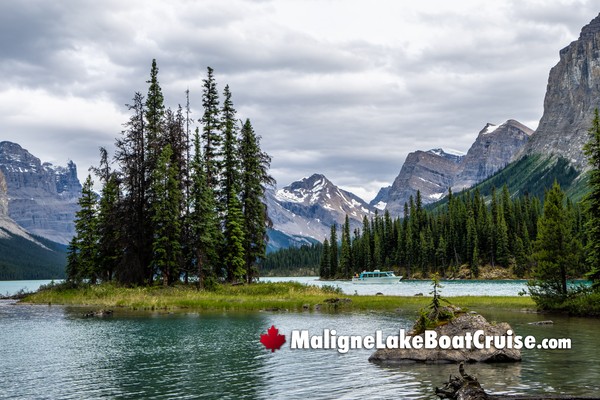
Maligne Lake Boat Cruise During July

The Maligne Lake boat cruise in July combines warm summer conditions with deep wilderness scenery, glacier-fed water, iconic mountain landscapes, and one of the most recognizable viewpoints in the Canadian Rockies. The journey feels immersive, scenic, and distinctly alpine from beginning to end.

Maligne Lake Boat Cruise During July

Maligne Lake Boat Cruise During July

The Maligne Lake boat cruise during July is one of the most iconic summer experiences in the Canadian Rockies. July brings warm daytime temperatures, long daylight hours, calm mountain mornings, and vibrant alpine scenery surrounding the lake. The combination of glacier-fed water, towering mountain peaks, dense evergreen forests, and the famous journey toward Spirit Island creates a peaceful yet dramatic wilderness atmosphere.

By July, the lake is fully open and surrounded by lush summer landscapes. Snow has mostly retreated from lower elevations, revealing green forests and rugged mountain slopes, while higher peaks may still hold patches of lingering snow that contrast beautifully against the deep blue water. The lake itself often displays rich blue and turquoise tones that become especially vivid under bright midsummer sunlight.

As the boat moves farther from the shoreline marina, the scale of Maligne Lake becomes increasingly impressive. The long narrow lake stretches deep into remote mountain terrain, with steep peaks rising sharply from the water on both sides. July’s calm mornings often create mirror-like reflections across the lake surface, producing some of the most photographed scenery in Jasper National Park.

The atmosphere during the cruise feels quiet and remote despite July being peak tourism season. Once away from the docks, the surrounding wilderness begins to dominate the experience. Dense forests, glacier-carved valleys, rocky cliffs, and distant snowfields create a feeling of traveling deep into untouched alpine country.

The approach toward Spirit Island is one of the highlights of the July cruise. During midsummer, the island is surrounded by vibrant blue water and framed by dramatic mountain backdrops. The famous viewpoint becomes especially striking in July because of the combination of green forests, exposed peaks, and bright summer light reflecting across the lake.

Weather conditions during July are generally comfortable, though the lake’s elevation and glacier-fed water can create cool breezes while on the boat. Light jackets are often useful, especially during early morning or evening departures. Afternoon conditions are usually warmer, with sunlight illuminating the surrounding mountains and forests throughout the cruise.

Wildlife sightings are possible throughout the Maligne Lake area during July. Bald eagles, deer, elk, mountain goats, and occasionally bears may appear along the shoreline or nearby valleys. The surrounding wilderness feels highly active during midsummer, with flowing waterfalls, active birdlife, and thriving alpine vegetation adding life to the landscape.

July also provides excellent conditions for photography. The extended daylight hours allow visitors to enjoy soft morning light, bright midday mountain scenery, and warm evening tones reflecting across the water. Calm lake conditions during quieter periods can produce exceptionally clear reflections of the surrounding peaks.

Experiencing the Maligne Lake boat cruise during July combines warm summer conditions with deep wilderness scenery, glacier-fed water, iconic mountain landscapes, and one of the most recognizable viewpoints in the Canadian Rockies. The journey feels immersive, scenic, and distinctly alpine from beginning to end. Maligne Lake Boat Cruise

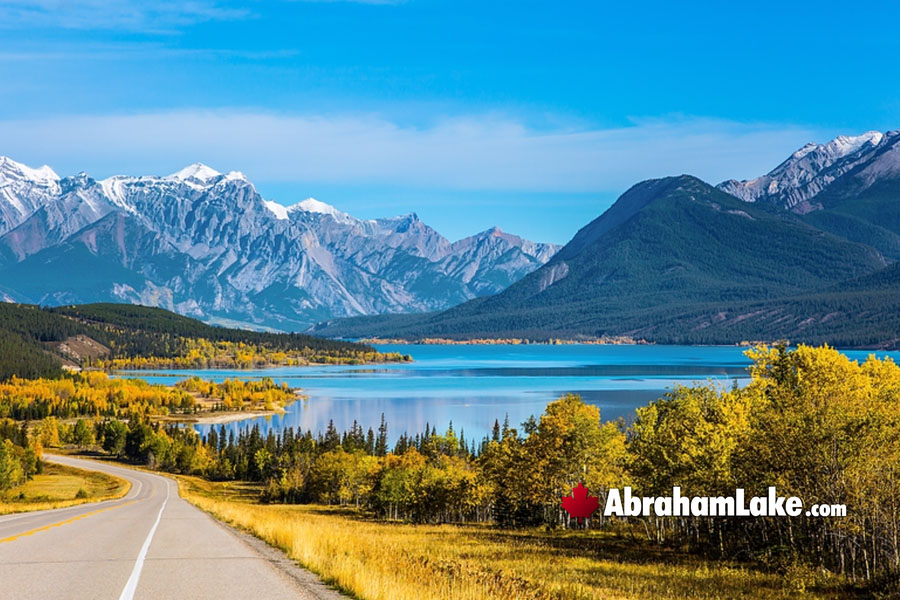
July at Abraham Lake

Abraham Lake in July combines warm summer weather with dramatic Rocky Mountain scenery, brilliant glacial colors, powerful windswept landscapes, and a quieter wilderness atmosphere that feels both expansive and rugged.

July at Abraham Lake

July at Abraham Lake

The Abraham Lake during July is a striking summer destination defined by vivid turquoise water, expansive mountain scenery, warm daylight, and wide-open wilderness landscapes along the eastern edge of the Canadian Rockies. Mid-summer transforms the area into a dramatic contrast of bright blue reservoir water, dry mountain slopes, evergreen forests, and rugged peaks stretching across the horizon.

By July, the famous winter ice bubbles are long gone, replaced by fully thawed water and active summer recreation throughout the lake region. The lake often displays intense shades of turquoise and blue caused by glacial silt carried into the reservoir from nearby mountain rivers. Under strong July sunlight, the water can appear almost unreal in color, especially when contrasted against the gray rock formations and green forested slopes surrounding the shoreline.

The atmosphere around Abraham Lake during July feels open, raw, and less developed than many of the busier national park destinations farther west. The landscape has a more untamed and expansive character, with fewer large tourism facilities and long stretches of rugged shoreline where visitors can stop to explore viewpoints, beaches, and rocky outcrops. The area feels especially scenic along the David Thompson Highway, where mountain views appear continuously around the lake’s winding edges.

July weather is generally warm during the daytime, though strong winds are common around the lake because of the exposed terrain and mountain valleys. Calm mornings can produce smooth reflective water conditions, while afternoons often bring stronger gusts that create waves and dramatic movement across the reservoir surface. The changing weather and lighting conditions constantly reshape the appearance of the surrounding landscape throughout the day.

The mountain scenery during July is especially impressive because most lower-elevation snow has melted, exposing rugged cliffs, alpine ridges, and broad valleys surrounding the lake. Higher peaks may still retain patches of snow or small glaciers, adding contrast and depth to the horizon. During clear summer days, visibility can stretch for enormous distances across the Rockies.

Outdoor recreation is highly active during July around Abraham Lake. Visitors often stop for photography, lakeside walks, paddling, camping, fishing, and roadside sightseeing. The shoreline contains numerous scenic pullouts and access points where travelers can experience the lake from different perspectives. Sunsets can be particularly memorable as warm golden light spreads across the water and mountain slopes.

Wildlife sightings are also possible throughout the area during July. Bighorn sheep, deer, elk, eagles, and occasionally bears may appear near roadside areas, forest edges, or mountain slopes surrounding the lake corridor. The region feels especially alive during midsummer as vegetation flourishes and mountain ecosystems fully emerge from the long winter season.

Abraham Lake in July combines warm summer weather with dramatic Rocky Mountain scenery, brilliant glacial colors, powerful windswept landscapes, and a quieter wilderness atmosphere that feels both expansive and rugged. Abraham Lake

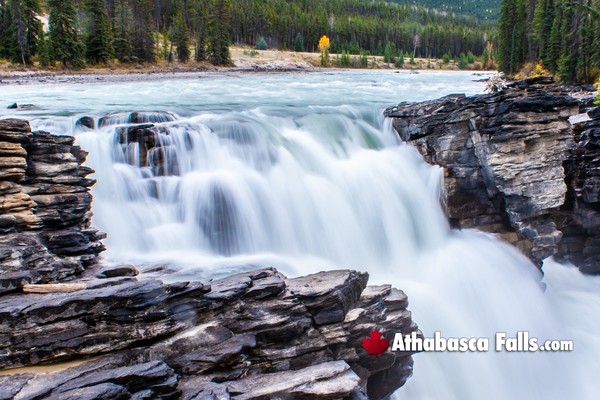
Athabasca Falls During July

The atmosphere at Athabasca Falls during July combines raw natural power with classic Rocky Mountain scenery. The thunderous sound of the water, cool glacial mist, carved canyon rock, and surrounding mountain wilderness create an experience that feels both beautiful and intensely powerful at the same time.

Athabasca Falls During July

Athabasca Falls During July

The Athabasca Falls during July is one of the most powerful and visually dramatic waterfall experiences in the Canadian Rockies. Mid-summer conditions bring strong glacier-fed water flow, lush surrounding forests, long daylight hours, and comfortable hiking weather, making July one of the best times to experience the falls at full force.

By July, mountain snowmelt from higher elevations continues feeding the Athabasca River, creating immense water volume rushing through the narrow canyon at the falls. The sheer power of the water becomes immediately noticeable from the viewing platforms. Massive amounts of glacial water thunder over the rocky ledge before crashing into the canyon below, producing mist, roaring sound, and constant movement throughout the area.

The contrast between the bright turquoise glacial water and the dark canyon rock is especially striking during July. Sunlight often illuminates the spray rising from the falls while highlighting the smooth rock formations carved over thousands of years by erosion and flowing water. The canyon walls, potholes, and sculpted rock channels surrounding the falls become highly visible during the clear summer conditions.

The surrounding environment feels vibrant and alive during July. Dense evergreen forests line the riverbanks, wildflowers may appear along nearby trails, and the fresh mountain air combines with cool mist drifting from the waterfall itself. Even on warm summer afternoons, the immediate area near the falls often feels refreshingly cool because of the moving water and canyon airflow.

Walking paths and viewing areas around Athabasca Falls are generally fully accessible during July, allowing visitors to explore multiple perspectives of the waterfall and canyon system. Short trails lead to viewpoints overlooking the upper falls, lower canyon sections, and quieter downstream river channels where the water begins calming after passing through the gorge. The movement between viewpoints creates constantly changing perspectives of the water’s force and surrounding mountain scenery.

July is also an excellent month for photography at the falls. Early mornings often provide softer light and fewer visitors, while midday sunlight can intensify the turquoise tones in the water. Mist rising from the canyon sometimes creates rainbows under the right lighting conditions, adding even more drama to the scenery.

Wildlife may occasionally appear in the surrounding forested areas during July. Elk, deer, birds, and smaller mountain animals are sometimes seen along nearby trails or roadside sections of Jasper National Park. The entire area feels active and energized during midsummer as rivers, forests, and alpine ecosystems fully emerge from winter conditions.

The atmosphere at Athabasca Falls during July combines raw natural power with classic Rocky Mountain scenery. The thunderous sound of the water, cool glacial mist, carved canyon rock, and surrounding mountain wilderness create an experience that feels both beautiful and intensely powerful at the same time. Athabasca Falls

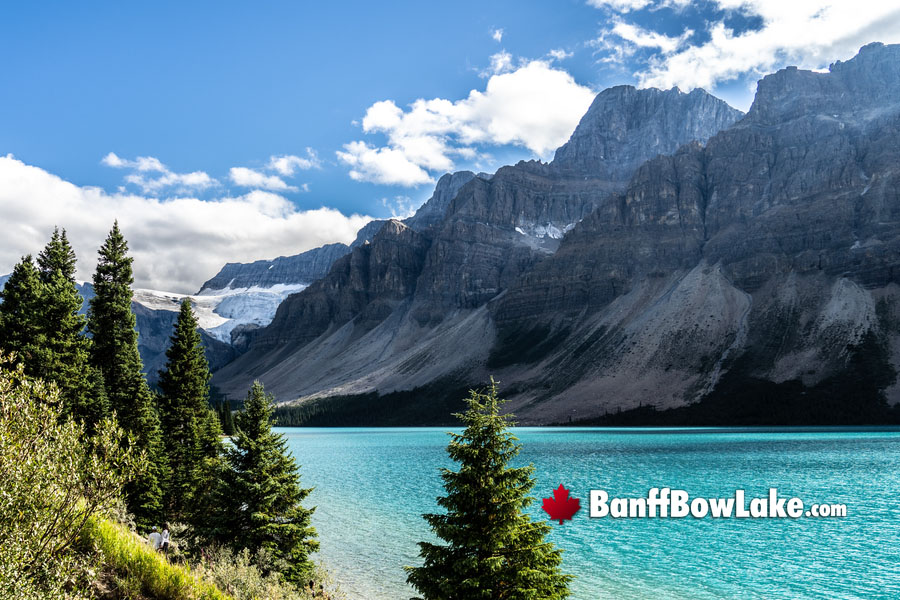
Banff Bow Lake in July

Bow Lake during July combines glacier-fed turquoise water, refreshing alpine air, towering mountain scenery, and peaceful summer wilderness conditions along one of the most scenic drives in North America.

Banff Bow Lake in July

Banff Bow Lake in July

The Bow Lake during July is one of the most beautiful and accessible alpine lake experiences along the Icefields Parkway. Mid-summer brings fully thawed turquoise water, long daylight hours, vibrant mountain scenery, and relatively mild temperatures, making July one of the most photogenic and enjoyable times to visit the lake.

By July, the lake is usually completely ice-free and reflects the surrounding peaks with remarkable clarity during calm conditions. The vivid blue and turquoise colors become especially intense under bright summer sunlight, created by fine glacial silt suspended in the water. The surrounding mountain walls, glaciers, and alpine slopes frame the lake in every direction, giving the entire area a dramatic high-elevation atmosphere.

The scenery around Bow Lake during July feels expansive and peaceful. Large sections of lower mountain slopes are snow-free, exposing rugged rock faces and green alpine terrain, while higher peaks still retain patches of snow and glacier ice. The contrast between the bright water, gray mountains, and lingering snowfields creates a classic Canadian Rockies landscape.

July weather at Bow Lake is generally comfortable during the daytime, though temperatures remain cooler than lower-elevation areas because of the altitude. The mountain air feels crisp and refreshing even on warm summer afternoons. Breezes moving across the lake are common, and weather can still shift quickly between sunshine, clouds, and occasional brief mountain showers.

The shoreline area becomes highly active during July as travelers stop along the Icefields Parkway to admire the scenery, take photographs, or begin nearby hiking trails. Despite its popularity, Bow Lake often retains a calm and serene atmosphere because of its large open setting and the immense scale of the surrounding mountains.

Walking along the lakeshore in July is especially memorable. The sound of small waves moving onto the rocky shoreline combines with distant waterfalls, glacier runoff, and occasional wind moving through the alpine terrain. Reflections across the lake can become exceptionally beautiful during quieter morning or evening periods when the water surface calms.

July is also one of the best times for hiking near Bow Lake. Trails leading deeper into the surrounding alpine valleys and glacier viewpoints are generally far more accessible than earlier in the season. The nearby Bow Glacier area becomes especially scenic as summer conditions expose more of the rugged glacial terrain and flowing meltwater streams.

Wildlife sightings are possible throughout the Bow Lake region during July. Marmots, mountain goats, deer, and various alpine birds are sometimes seen near roadside areas or higher mountain slopes. The surrounding environment feels fully alive during midsummer, with alpine vegetation flourishing beneath the dramatic peaks.

Bow Lake during July combines glacier-fed turquoise water, refreshing alpine air, towering mountain scenery, and peaceful summer wilderness conditions along one of the most scenic drives in North America. Banff Bow Lake

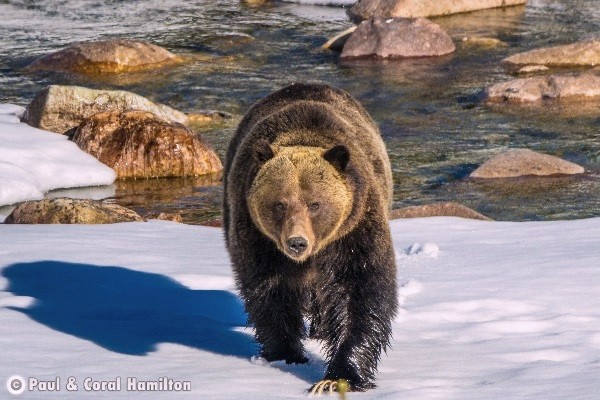
Banff Wildlife During July

July wildlife viewing in Banff combines lush summer landscapes, active mountain ecosystems, and opportunities to observe iconic Rocky Mountain animals surrounded by some of the most dramatic scenery in Canada. The season feels energetic, vibrant, and deeply connected to the rhythms of the alpine wilderness.

Banff Wildlife During July

Banff Wildlife During July

Wildlife viewing in Banff National Park during July is one of the highlights of summer in the Canadian Rockies. The warm weather, long daylight hours, active vegetation, and open mountain terrain create excellent conditions for seeing a wide range of animals throughout the park. By midsummer, wildlife activity is fully underway as animals feed heavily, raise young, and move through valleys, forests, riversides, and alpine slopes.

July mornings in Banff often begin with calm mountain air and increased wildlife movement. Early sunrise hours are one of the best times to spot elk grazing in open meadows, deer feeding near forest edges, or bighorn sheep resting along rocky hillsides. Cooler morning temperatures encourage animals to remain active before the warmer afternoon sun arrives.

Elk are among the most commonly seen large animals during July. They are often found in grassy roadside areas, open valleys, golf courses, riverbanks, and near sections of the Bow Valley Parkway. Male elk are typically growing new antlers covered in soft velvet during midsummer, while females are often seen with calves nearby.

Black bears and grizzly bears are also active throughout July as berry growth and summer vegetation increase across the park. Bears may occasionally be seen feeding along roadside slopes, avalanche paths, berry patches, or open meadows. While wildlife sightings can be exciting, July visitors are strongly encouraged to maintain proper distance and remain highly aware while hiking or exploring quieter areas of the park.

Bighorn sheep and mountain goats are frequently spotted in rocky terrain and alpine regions during July. Mountain goats are often seen at higher elevations near steep cliffs, while bighorn sheep regularly appear along roadside mountain slopes and valley walls. Their white or tan coloring can stand out clearly against the darker rock formations during sunny summer conditions.

Smaller wildlife also becomes highly visible during July. Hoary marmots whistle from rocky alpine areas, pikas gather vegetation among boulder fields, and squirrels remain active throughout forested picnic and trail areas. Birdlife is abundant as well, including bald eagles, ravens, Clark’s nutcrackers, ospreys, and various songbirds active near rivers, lakes, and forests.

The alpine regions of Banff during July feel especially alive because snow has largely retreated from many hiking areas, opening access to habitats where wildlife becomes more visible. Trails near Lake Louise, Moraine Lake, Sunshine Meadows, and the Icefields Parkway corridor often provide opportunities to observe mountain animals from safe distances.

Evenings during July can also produce excellent wildlife encounters. As temperatures cool, animals often return to open valleys and roadside meadows to feed. Sunset light across the mountains combined with wildlife movement creates some of the most memorable summer experiences in Banff National Park.

July wildlife viewing in Banff combines lush summer landscapes, active mountain ecosystems, and opportunities to observe iconic Rocky Mountain animals surrounded by some of the most dramatic scenery in Canada. The season feels energetic, vibrant, and deeply connected to the rhythms of the alpine wilderness. Canadian Rockies Wildlife Wildlife On Video

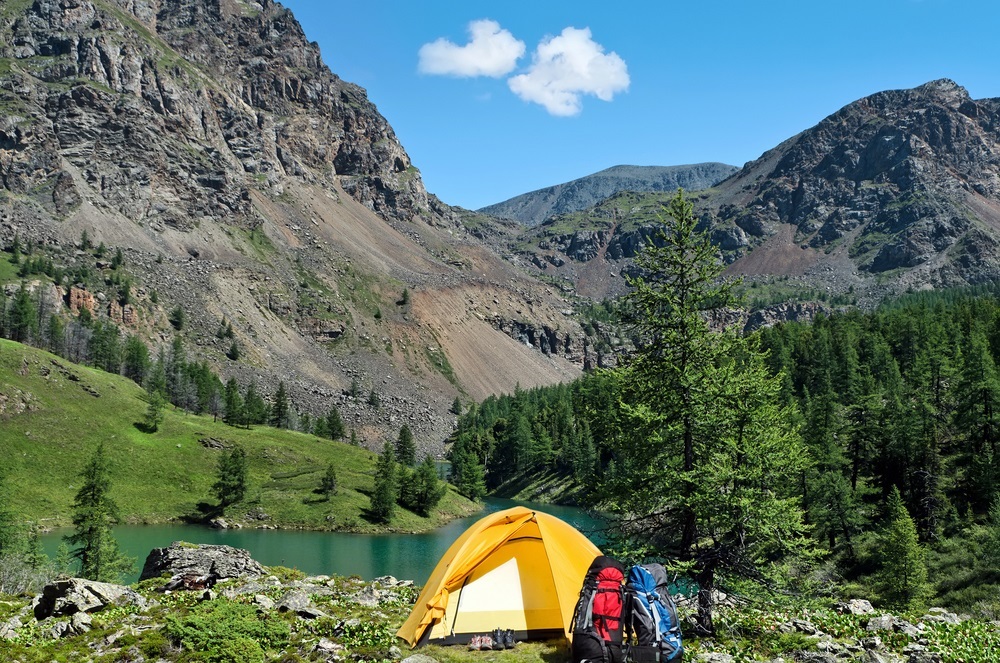
Camping in Banff During July

Camping in Banff during July combines warm summer adventure with alpine scenery, outdoor exploration, and the timeless experience of sleeping beneath the mountains in one of Canada’s most iconic national parks.

Camping in Banff During July

Camping in Banff During July

Camping in Banff National Park during July is one of the most popular and rewarding summer experiences in the Canadian Rockies. Warm daytime temperatures, long hours of daylight, accessible mountain roads, and fully open campgrounds make July peak camping season throughout the park. Forested campsites, glacier-fed rivers, alpine scenery, and cool mountain evenings create a classic Rockies camping atmosphere that attracts visitors from around the world.

By July, nearly all major front-country campgrounds and many backcountry areas are fully operational. Snow has largely disappeared from lower elevations, hiking trails become far more accessible, and lakes and rivers are flowing strongly with glacial meltwater. Campgrounds feel lively and active during midsummer, with travelers gathering around campfires, preparing meals outdoors, and enjoying the surrounding mountain scenery late into the evening.

Daytime weather during July is usually warm and comfortable, especially in valley locations around Banff, Lake Louise, and the Bow Valley corridor. However, mountain conditions can still shift quickly. Even during midsummer, evenings and early mornings often become cool or cold, particularly at higher elevations. Campers usually benefit from layered clothing, warm sleeping gear, and rain protection because short mountain storms can develop unexpectedly.

One of the most memorable parts of camping in July is the extended daylight. Sunrise arrives early and daylight can last well into the evening, allowing extra time for hiking, photography, paddling, wildlife viewing, or relaxing around camp. Sunset light across the mountains often creates dramatic colors and long shadows over the forests and peaks surrounding the campgrounds.

Wildlife awareness becomes especially important during July camping season. Bears, elk, deer, bighorn sheep, foxes, and smaller animals remain highly active throughout the park during midsummer. Campers are expected to follow strict food storage regulations and maintain clean campsites to avoid attracting wildlife. Seeing animals from a safe distance is a common part of the Banff camping experience.

July is also ideal for combining camping with outdoor activities across the park. Many visitors spend their days exploring areas such as Lake Louise, Moraine Lake, the Icefields Parkway, or hiking trails throughout the surrounding mountains before returning to camp in the evening.

The atmosphere across Banff campgrounds during July feels energetic yet deeply connected to nature. Families, hikers, photographers, cyclists, and international travelers all gather beneath towering peaks and dense forests while rivers and mountain winds provide a constant natural soundtrack throughout the park.

Nighttime camping in July can be especially beautiful. Clear skies often reveal large numbers of stars above the mountains, while cooler nighttime temperatures create a crisp alpine atmosphere. In quieter campgrounds farther from townsites, the sounds of rivers, wind through the trees, and distant wildlife calls reinforce the feeling of being immersed in the Rocky Mountain wilderness.

Camping in Banff during July combines warm summer adventure with alpine scenery, outdoor exploration, and the timeless experience of sleeping beneath the mountains in one of Canada’s most iconic national parks. Banff Camping

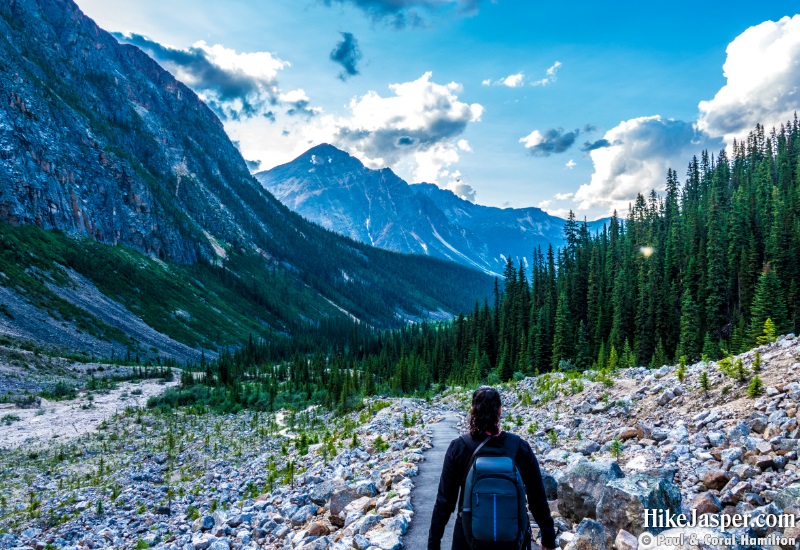
Hiking in July

Hiking during July combines adventure, scenery, wildlife, and alpine exploration at the height of the Canadian Rockies summer season. The trails feel open, alive, and deeply connected to the natural rhythms of the mountains.

Hiking in July

Hiking in July

Hiking in Banff National Park during July is considered one of the best times of the entire year to explore the Canadian Rockies on foot. Mid-summer brings long daylight hours, warmer temperatures, accessible mountain trails, vibrant alpine scenery, and a fully active wilderness environment. By July, many of the park’s most famous hiking routes are largely snow-free, opening access to lakes, alpine meadows, mountain passes, waterfalls, glaciers, and panoramic summit viewpoints.

The hiking atmosphere in July feels energetic and alive. Forests are lush and green, rivers and waterfalls are flowing strongly with glacial meltwater, and alpine wildflowers begin covering meadows and slopes at higher elevations. The mountains feel expansive and inviting during midsummer, with hikers spreading out across trails ranging from short lakeside walks to challenging summit ascents.

Weather during July is generally comfortable for hiking. Valley temperatures are often warm during the day, while higher elevations remain cooler and refreshing. However, mountain conditions still change quickly. Sunshine can shift to clouds, rain, or even brief mountain snow at higher altitudes within a short period of time. Layered clothing, waterproof gear, and proper footwear remain important even during peak summer.

July is one of the best months for alpine hiking because many higher-elevation trails become far more accessible after snow retreat. Areas around Lake Louise, Moraine Lake, Sunshine Meadows, and the Icefields Parkway often provide spectacular ridge walks, glacier views, turquoise lakes, and open alpine terrain during midsummer.

Popular hikes in July range from relatively easy scenic routes to demanding mountain adventures. Trails such as Johnston Canyon, Lake Agnes, Plain of Six Glaciers, Parker Ridge, Helen Lake, and Sentinel Pass are especially popular because of their combination of accessibility and dramatic scenery. Many trails feature glacier-fed lakes, waterfalls, wildflower meadows, rocky passes, and sweeping valley views.

Wildlife activity is also high during July hiking season. Hikers may encounter elk, deer, marmots, pikas, bighorn sheep, mountain goats, and occasionally bears throughout the park. Wildlife awareness is extremely important during midsummer because animals are highly active across many trail systems. Carrying bear spray and practicing proper trail safety are common parts of hiking in Banff.

One of the greatest advantages of hiking in July is the extended daylight. Early sunrises and late sunsets provide long hiking windows, allowing visitors to begin early for quieter trails or remain out later to experience softer evening mountain light. Morning hikes often provide calmer weather and fewer crowds, while sunset hikes can create dramatic lighting across the peaks and valleys.

The alpine scenery during July feels especially vivid. Glacier-fed lakes display intense turquoise colors, waterfalls roar with snowmelt, and distant snowfields contrast sharply against exposed gray rock and green forests. The combination of fresh mountain air, immense scenery, and accessible terrain makes July hiking one of the defining summer experiences in the Rockies.

Hiking during July combines adventure, scenery, wildlife, and alpine exploration at the height of the Canadian Rockies summer season. The trails feel open, alive, and deeply connected to the natural rhythms of the mountains. Hiking

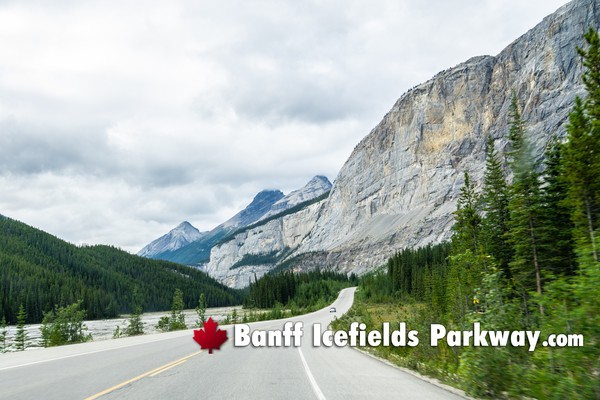
Icefields Parkway During July

The Icefields Parkway during July combines classic summer mountain travel with glaciers, waterfalls, wildlife, turquoise lakes, and some of the largest and most dramatic scenery in the Canadian Rockies.

Icefields Parkway During July

Icefields Parkway During July

Driving the Icefields Parkway during July is widely considered one of the greatest summer road trip experiences in the world. Mid-summer brings fully accessible highways, long daylight hours, vibrant alpine scenery, glacier-fed lakes, active wildlife, and comfortable travel conditions through the heart of the Canadian Rockies. The route between Banff and Jasper feels alive with waterfalls, mountain rivers, glaciers, forests, and towering peaks visible around nearly every corner.

By July, most lower-elevation snow has disappeared, exposing the rugged mountain terrain and making the surrounding scenery feel enormous and dramatic. At the same time, glaciers and snowfields still dominate the higher elevations, creating a powerful contrast between summer valleys and permanent alpine ice. The road itself winds through massive mountain passes, beside turquoise lakes, across open valleys, and beneath some of the highest peaks in the Rockies.

The atmosphere along the Icefields Parkway during July feels expansive and constantly changing. One section of the drive may feature dense evergreen forests and flowing rivers, while the next opens into broad alpine valleys surrounded by glaciers and rocky cliffs. Waterfalls are especially impressive during midsummer because snowmelt continues feeding rivers and creeks throughout the region.

July weather is generally excellent for driving and sightseeing. Daytime temperatures are usually mild and comfortable, though conditions can still shift quickly in the mountains. Sunshine, clouds, fog, rain, and occasional cool winds may all occur within a single day. Morning drives often provide calmer weather, softer lighting, and better wildlife viewing opportunities.

Glacier-fed lakes become one of the major highlights of the Parkway during July. Areas such as Bow Lake, Peyto Lake, and Waterfowl Lakes display vivid turquoise and blue colors caused by glacial silt suspended in the water. Under bright summer sunlight, the lakes can appear intensely colorful against the surrounding gray mountain peaks and green forests.

The Columbia Icefield region becomes especially dramatic during July. Massive glaciers spill down between dark rocky peaks while visitors gather to experience the scale of the ancient icefields. The combination of warm summer conditions in the valleys and visible glacier ice overhead creates one of the most unique landscapes anywhere in North America.

Wildlife viewing during July is another major part of the Parkway experience. Bears, elk, deer, bighorn sheep, mountain goats, marmots, and eagles are commonly spotted throughout the corridor. Early mornings and evenings are often the best times for sightings, especially near roadside meadows and river valleys.

July is also ideal for stopping frequently along the Parkway. Short walks, scenic viewpoints, waterfalls, hiking trails, picnic areas, and photography pullouts are fully accessible throughout the route. Many travelers spend an entire day - or several days - slowly exploring the highway because nearly every section offers another dramatic landscape or natural attraction.

Sunrise and sunset drives during July can be particularly unforgettable. Warm evening light spreads across the peaks and glaciers while long shadows move through the valleys. The mountains often glow with deep gold and orange tones late into the evening before cooler alpine colors return after sunset.

The Icefields Parkway during July combines classic summer mountain travel with glaciers, waterfalls, wildlife, turquoise lakes, and some of the largest and most dramatic scenery in the Canadian Rockies. Banff Icefields Parkway

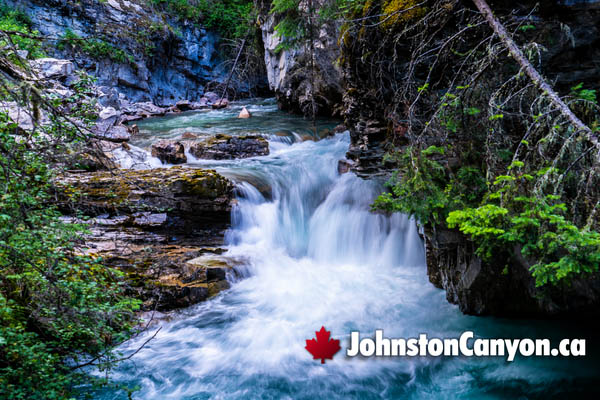
Johnston Canyon During July

Johnston Canyon during July combines cool rushing waterfalls, lush forest scenery, dramatic canyon geology, and accessible summer hiking within one of the most scenic and iconic locations in the Canadian Rockies.

Johnston Canyon During July

Johnston Canyon During July

The Johnston Canyon during July is one of the most popular and refreshing summer hiking destinations in Banff National Park. Mid-summer brings warm daytime temperatures, fully flowing waterfalls, lush forest scenery, and accessible canyon trails, making July an ideal time to experience the dramatic limestone gorge and its series of waterfalls.

By July, the canyon is completely transformed from winter conditions. Snow and ice are gone from the main trail system, and the surrounding forest is vibrant with deep green vegetation, flowing creeks, and active wildlife. The cool canyon environment creates a refreshing escape from warmer valley temperatures, especially during sunny afternoons.

The elevated catwalks built along the canyon walls become especially impressive during July because visitors can fully appreciate the rushing turquoise water flowing beneath them. Meltwater from higher elevations continues feeding Johnston Creek, producing strong water flow through the narrow canyon passages. The sound of rushing water echoes constantly through the gorge, adding movement and energy to the entire hike.

The Lower Falls are particularly dramatic during midsummer. Water crashes through a tight rock opening into a deep pool below, creating cool mist and powerful sound within the confined canyon walls. The short tunnel leading to the viewing area feels especially refreshing on warm July days because of the cooler temperatures and spray from the waterfall.

Continuing toward the Upper Falls in July reveals even more expansive mountain scenery and forested surroundings. The trail gradually climbs through dense evergreen forest alongside the creek, with occasional bridges and viewpoints overlooking the canyon below. The Upper Falls themselves appear broader and more open than the Lower Falls, with water cascading down a tall rocky cliff into the creek system below.

July is also one of the best times to continue beyond the Upper Falls toward areas such as the Ink Pots. Higher-elevation trails become far more accessible during midsummer, allowing hikers to experience open meadows, mountain views, and quieter sections of the valley beyond the canyon crowds. The contrast between the narrow canyon and the wider alpine landscape farther up the trail creates a rewarding progression through different mountain environments.

The atmosphere at Johnston Canyon during July is lively and active because it is one of the most visited attractions in Banff National Park. Early mornings and evenings tend to provide quieter conditions, softer lighting, and a more peaceful hiking experience. Midday periods are often busiest, especially near the Lower Falls viewing platforms.

Wildlife activity is possible throughout the canyon area during July. Birds, squirrels, chipmunks, and occasionally larger animals such as deer or elk may appear near forest edges or quieter sections of the trail. The surrounding ecosystem feels highly active during midsummer as rivers, forests, and mountain vegetation flourish.

Johnston Canyon during July combines cool rushing waterfalls, lush forest scenery, dramatic canyon geology, and accessible summer hiking within one of the most scenic and iconic locations in the Canadian Rockies. Johnston Canyon

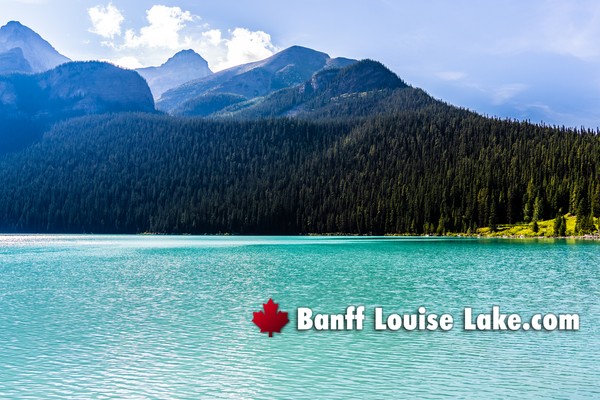
Lake Louise in July

July, Lake Louise combines turquoise glacier-fed water, accessible alpine hiking, refreshing mountain air, and some of the most breathtaking scenery anywhere in the Canadian Rockies.

Lake Louise in July

Lake Louise in July

The Lake Louise during July is one of the most iconic and visually stunning summer destinations in the Canadian Rockies. Mid-summer brings fully thawed turquoise water, long daylight hours, accessible hiking trails, vibrant alpine scenery, and a lively mountain atmosphere that attracts visitors from around the world.

By July, the lake has completely transformed from its frozen spring appearance into the brilliant turquoise color for which it is famous. Fine glacial silt suspended in the water reflects sunlight and creates the intense blue-green tones that appear especially vivid under clear summer skies. The surrounding mountain peaks, glaciers, forests, and rocky slopes frame the lake in dramatic fashion, producing one of the most recognizable landscapes in Canada.

The atmosphere around Lake Louise during July feels energetic and alive. Visitors gather along the lakeshore from early morning through evening to photograph the scenery, walk the shoreline paths, canoe across the water, or begin hikes into the surrounding mountains. Despite the popularity of the area, the immense mountain setting still creates moments of calm and awe, especially during quieter morning hours.

July weather at Lake Louise is generally comfortable during the daytime, though the elevation keeps temperatures cooler than many lower-altitude summer destinations. Warm sunshine is common, but mountain conditions can still shift rapidly with passing clouds, cool breezes, or brief rain showers. Early mornings often feel crisp and refreshing, while afternoons become warmer beneath the alpine sun.

Canoeing on Lake Louise during July is one of the signature summer experiences in Banff National Park. The calm turquoise water reflects glaciers and mountain peaks while paddlers move quietly across the lake beneath towering cliffs and hanging icefields. Morning conditions are often calmer and provide the clearest reflections across the water surface.

July is also one of the best months for hiking around Lake Louise. Trails leading toward Lake Agnes, the Plain of Six Glaciers, Big Beehive, Little Beehive, and surrounding alpine areas are generally far more accessible than earlier in the season. Wildflowers begin appearing in alpine meadows, waterfalls flow strongly with glacier melt, and higher viewpoints reveal spectacular panoramas of the lake and surrounding mountains.

The nearby Fairmont Chateau Lake Louise adds to the classic mountain atmosphere during July. The historic lakeside hotel overlooks the water and provides a striking contrast between elegant architecture and rugged wilderness scenery.

Wildlife activity remains active throughout the Lake Louise area during July. Hikers and visitors may encounter deer, elk, marmots, pikas, birds, and occasionally bears in surrounding forests and alpine zones. Wildlife awareness is especially important on nearby hiking trails during midsummer.

Sunrise and sunset periods at Lake Louise during July can be particularly unforgettable. Early morning light gradually illuminates the Victoria Glacier and surrounding peaks while calm water reflects the changing colors across the lake. Evening light often creates softer golden tones across the mountains as the crowds begin thinning and the lake becomes quieter again.

July, Lake Louise combines turquoise glacier-fed water, accessible alpine hiking, refreshing mountain air, and some of the most breathtaking scenery anywhere in the Canadian Rockies. Banff Lake Louise

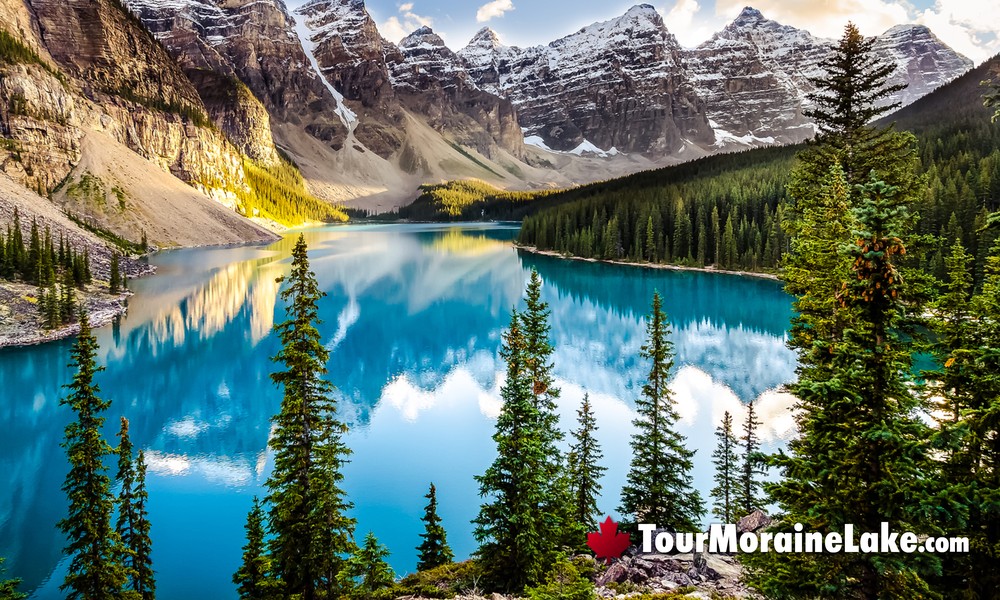
Moraine Lake in July

Moraine Lake during July combines vivid glacier-fed water, accessible alpine hiking, dramatic mountain scenery, and one of the most iconic summer landscapes anywhere in the Canadian Rockies.

Moraine Lake in July

Moraine Lake in July

The Moraine Lake during July is one of the most breathtaking alpine destinations in the Canadian Rockies. Mid-summer brings fully thawed turquoise water, accessible hiking trails, lush alpine scenery, and dramatic mountain reflections that make July one of the most spectacular times to visit the lake.

By July, Moraine Lake has fully emerged from spring conditions and displays the intense blue color that has made it world famous. The vivid turquoise water is created by glacial rock flour suspended in the lake, which reflects sunlight in brilliant shades of blue and green under clear summer skies. The surrounding Valley of the Ten Peaks towers above the lake with massive jagged mountain walls rising sharply from the shoreline, creating one of the most dramatic mountain settings in Banff National Park.

The atmosphere around Moraine Lake during July feels vibrant yet deeply alpine. Visitors arrive early in the morning to experience calm water reflections and softer mountain light, while daytime brings an energetic summer atmosphere with hikers, photographers, canoeists, and sightseers exploring the shoreline and surrounding trails.

July weather is generally comfortable during the daytime, though the high elevation keeps the area cooler than many lower mountain valleys. Mornings often feel crisp and refreshing, while afternoons can become pleasantly warm beneath the summer sun. Sudden mountain weather changes remain possible, including passing rain showers, cooler winds, or rapidly shifting cloud cover.

The famous Rockpile viewpoint becomes especially impressive during July. From the elevated viewpoint above the shoreline, visitors can see the full sweep of the turquoise lake framed by the Valley of the Ten Peaks. Calm mornings often create near-perfect reflections across the lake surface, while afternoon sunlight intensifies the vivid glacial colors in the water.

July is also one of the best months for hiking around Moraine Lake. Trails leading toward Larch Valley, Sentinel Pass, Consolation Lakes, and Eiffel Lake become far more accessible during midsummer. Alpine meadows begin showing wildflowers, waterfalls continue flowing from snowmelt, and the surrounding mountain terrain feels open and expansive beneath the long summer daylight.

Canoeing on Moraine Lake during July is another unforgettable experience. Paddling across the calm glacier-fed water places visitors directly beneath the towering mountain walls and hanging alpine slopes surrounding the lake. The quiet movement across the water combined with the immense scenery creates an especially peaceful atmosphere.

Wildlife activity remains active throughout the Moraine Lake region during July. Marmots, pikas, birds, deer, and occasionally bears may appear in surrounding forests, avalanche slopes, or alpine areas. Wildlife awareness is important for hikers exploring nearby trails during midsummer.

Sunrise and sunset periods during July are particularly memorable at Moraine Lake. Early morning light gradually illuminates the peaks above the lake while the turquoise water remains calm and reflective. Evening brings softer golden light across the mountains as cooler alpine air settles into the valley.

Moraine Lake during July combines vivid glacier-fed water, accessible alpine hiking, dramatic mountain scenery, and one of the most iconic summer landscapes anywhere in the Canadian Rockies. Moraine Lake

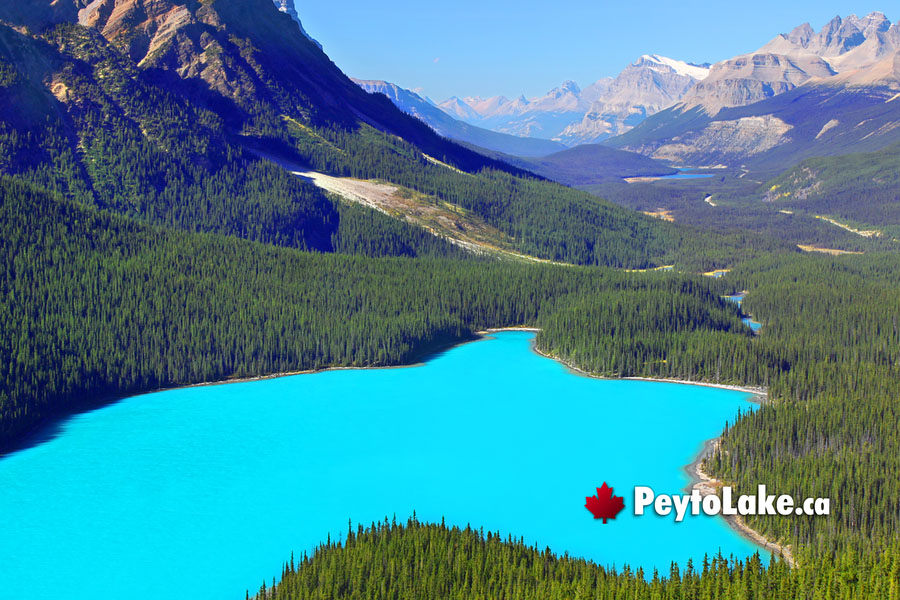
July at Peyto Lake

In July, Peyto Lake combines high-alpine scenery, vivid glacier-fed water, refreshing mountain air, and one of the most iconic panoramic viewpoints in Banff National Park.

July at Peyto Lake

July at Peyto Lake

The Peyto Lake during July is one of the most visually striking summer viewpoints in the Canadian Rockies. Mid-summer brings fully thawed turquoise water, snow-free viewing access, long daylight hours, and dramatic alpine scenery that make July one of the best times of the year to experience the lake.

By July, Peyto Lake displays its famous vivid blue and turquoise colors at peak intensity. The brilliant coloration comes from fine glacial silt suspended in the water, reflecting sunlight in bright shades that often appear almost unreal under clear summer skies. The lake’s distinctive shape becomes fully visible from the main viewpoint, surrounded by rugged mountain ridges, evergreen forests, and distant glaciers.

The atmosphere at Peyto Lake during July feels expansive and high alpine. Located along the Icefields Parkway, the viewpoint sits at a relatively high elevation, creating cooler temperatures and crisp mountain air even during warm summer days. Visitors stepping out onto the viewing platform are immediately met with broad panoramic scenery stretching across valleys, forests, peaks, and glacier-fed waterways.

July weather is generally mild and comfortable, though mountain conditions can still shift rapidly. Sunshine often illuminates the lake’s turquoise surface brilliantly, while passing clouds can dramatically change the lighting and mood across the surrounding mountains. Morning visits usually provide calmer conditions and softer light, while afternoon sun intensifies the lake’s vivid color.

The forested walking trail leading to the main viewpoint becomes fully accessible during July and offers a refreshing alpine atmosphere beneath dense evergreen trees. Occasional openings in the forest provide glimpses of surrounding mountain ranges before the full lake panorama suddenly appears at the viewpoint itself.

The surrounding landscape during July is especially dramatic because lower-elevation snow has mostly melted away while higher peaks still retain snowfields and glacier ice. This creates strong visual contrast between the bright turquoise lake, dark rocky peaks, green forests, and lingering white snow high above the valleys.

Wildlife activity is possible throughout the Peyto Lake region during July. Visitors may encounter marmots, pikas, birds, deer, or mountain goats in nearby alpine terrain or roadside sections of the Parkway. The surrounding mountain ecosystem feels fully active during midsummer as rivers flow strongly and alpine vegetation flourishes.

Photography conditions at Peyto Lake during July are exceptional. The combination of long daylight hours, glacier-fed color, and panoramic elevation creates ideal conditions for capturing the dramatic scenery. Sunrise and sunset periods often produce softer golden lighting across the peaks while maintaining the lake’s striking blue tones.

In July, Peyto Lake combines high-alpine scenery, vivid glacier-fed water, refreshing mountain air, and one of the most iconic panoramic viewpoints in Banff National Park. Peyto Lake

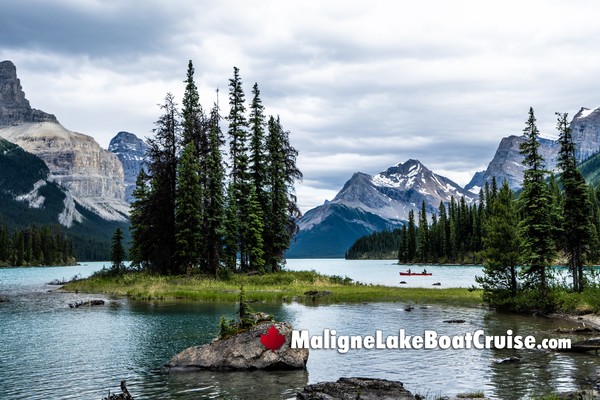
Spirit Island During July

Spirit Island during July combines peaceful wilderness scenery, glacier-fed mountain lakes, towering alpine landscapes, and one of the most iconic summer viewpoints in the Canadian Rockies.

Spirit Island During July

Spirit Island During July

The Spirit Island during July is one of the most iconic and photogenic summer landscapes in the Canadian Rockies. Mid-summer brings calm glacier-fed water, lush mountain scenery, accessible boat cruises, and long daylight hours that make July one of the best times to experience this famous destination on Maligne Lake.

By July, the surrounding landscape is fully alive with summer color. Dense evergreen forests line the shoreline, lower mountain slopes are snow-free, and the deep blue water of Maligne Lake reflects the towering peaks surrounding the valley. Higher elevations may still hold patches of lingering snow, creating dramatic contrast against the darker mountain ridges and forests.

The journey toward Spirit Island during July feels peaceful and immersive. As boats travel deeper into Maligne Lake, the scenery becomes increasingly remote and dramatic. Steep mountains rise directly from the water’s edge, glacier-carved valleys stretch into the distance, and the stillness of the wilderness creates a strong sense of isolation despite the popularity of the destination.

Spirit Island itself appears especially beautiful during midsummer. The small forested island sits surrounded by vivid blue water with dramatic mountain peaks rising behind it. July’s long daylight hours and bright summer conditions allow the island’s colors and textures to stand out clearly, from the dark green evergreens to the rocky shoreline and shimmering reflections across the water.

Morning visits during July are often especially memorable because calmer lake conditions can produce mirror-like reflections of the surrounding mountains and island. Early sunlight gradually illuminates the peaks while cool alpine air settles over the water, creating a quiet and almost surreal atmosphere around the viewpoint.

July weather at Spirit Island is generally comfortable and mild during the day, though the mountain setting and glacier-fed water can still create cool breezes. Light jackets remain useful, especially during morning cruises or changing mountain weather. Sunshine, passing clouds, and shifting light conditions continually reshape the appearance of the surrounding landscape throughout the day.

Wildlife activity around Maligne Lake remains active during July. Bald eagles, deer, elk, mountain goats, and occasionally bears may appear in nearby valleys, shorelines, or forested slopes surrounding the lake. The entire region feels vibrant and alive during midsummer as alpine ecosystems fully emerge from the long winter season.

Photography conditions at Spirit Island during July are exceptional. The combination of turquoise and deep blue water, towering mountain walls, evergreen forests, and glacier-fed light creates one of the most recognizable and photographed scenes in Canada. Warm evening light can add golden tones to the peaks while the water remains brilliantly colored beneath the alpine sky.

Spirit Island during July combines peaceful wilderness scenery, glacier-fed mountain lakes, towering alpine landscapes, and one of the most iconic summer viewpoints in the Canadian Rockies. Spirit Island

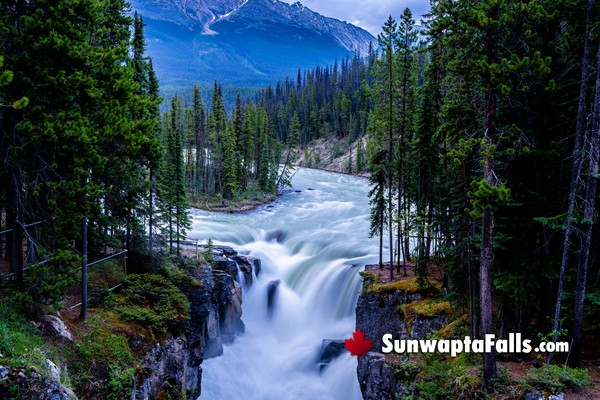
Sunwapta Falls in July

Sunwapta Falls during July combines roaring glacier-fed waterfalls, cool alpine forest air, rugged canyon scenery, and the immense natural energy of the Canadian Rockies at the height of summer.

Sunwapta Falls in July

Sunwapta Falls in July

The Sunwapta Falls during July is one of the most powerful and scenic waterfall experiences along the Icefields Parkway. Mid-summer conditions bring heavy glacier-fed water flow, lush forest surroundings, accessible trails, and long daylight hours that make July one of the most impressive times to visit the falls.

By July, meltwater from surrounding glaciers and snowfields is flowing strongly through the Sunwapta River, creating intense water volume at the falls. The rushing glacial water crashes through the narrow rocky canyon with tremendous force, producing roaring sound, cool mist, and constant movement throughout the area. The power of the falls feels especially dramatic during midsummer because the river remains heavily fed by ongoing snowmelt from higher elevations.

The main waterfall plunges through a rugged canyon split around a small island covered in evergreen trees, creating one of the most recognizable waterfall scenes in Jasper National Park. During July, the surrounding forest is fully green and vibrant, contrasting beautifully against the bright glacial water and dark canyon rock formations.

The atmosphere around Sunwapta Falls during July feels fresh and energetic. Cool mist drifting upward from the canyon provides relief during warm summer afternoons, while the surrounding mountain air remains crisp because of the elevation and flowing water. The sound of the falls echoes continuously through the forest and canyon, adding to the dramatic mountain atmosphere.

Walking trails and viewing platforms are generally fully accessible during July, allowing visitors to explore both the upper falls and quieter downstream sections of the river. Short forested paths lead to additional viewpoints where the Sunwapta River continues carving through rocky channels surrounded by dense evergreen forest.

July weather is usually comfortable during the daytime, though temperatures near the falls can feel noticeably cooler because of the mist and flowing glacial water. Sunshine often illuminates the spray rising from the canyon, and under the right lighting conditions, rainbows may occasionally appear in the mist above the falls.

The surrounding Icefields Parkway scenery during July adds to the experience. Towering mountain peaks, glacier-fed rivers, alpine forests, and distant snowfields surround the falls area, making the stop feel deeply connected to the larger Rocky Mountain landscape.

Wildlife activity is also possible throughout the Sunwapta region during July. Deer, elk, bears, birds, and smaller mountain animals may occasionally appear near roadside areas or forest edges surrounding the falls and nearby valleys. Early mornings and evenings often provide the calmest conditions and greatest chance for wildlife sightings.

Photography at Sunwapta Falls during July can be especially rewarding because of the strong water flow, vivid forest colors, and dramatic canyon scenery. Morning and evening light often create softer contrast across the waterfalls and surrounding trees, while bright midday sunlight intensifies the turquoise tones in the glacial water.

Sunwapta Falls during July combines roaring glacier-fed waterfalls, cool alpine forest air, rugged canyon scenery, and the immense natural energy of the Canadian Rockies at the height of summer. Sunwapta Falls

Banff, Alberta Map

Banff National Park

Contact banffjuly.com

Click to Contact Us